
Living History
Programs
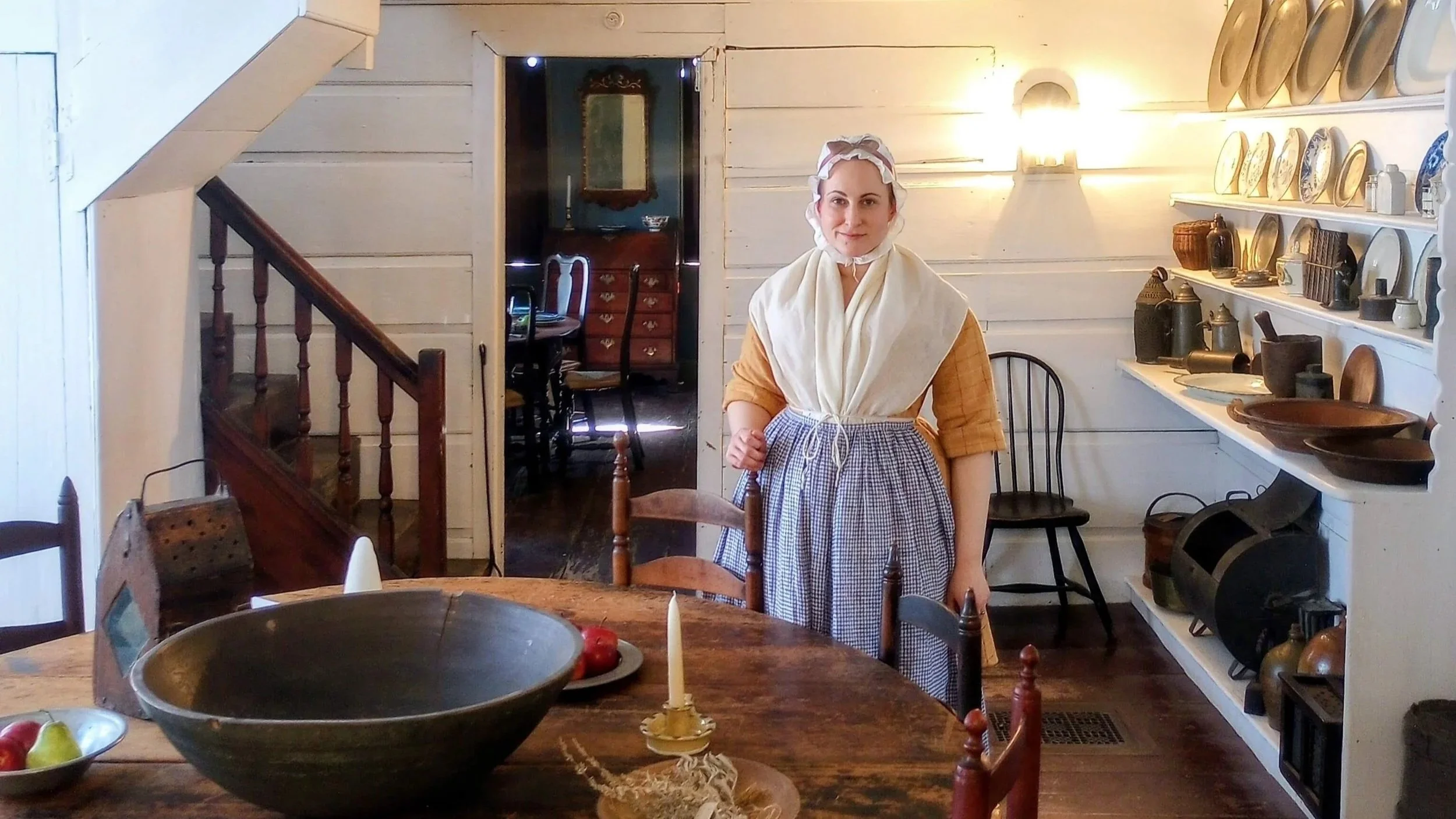
"An Extraordinary Code of Laws"
Abigail Adams's hopes for a better America in 1776
Created in collaboration with Adams National Historical Park in honor of the 250th anniversary of Abigail Adams’s "Remember the Ladies" letter in March 2026
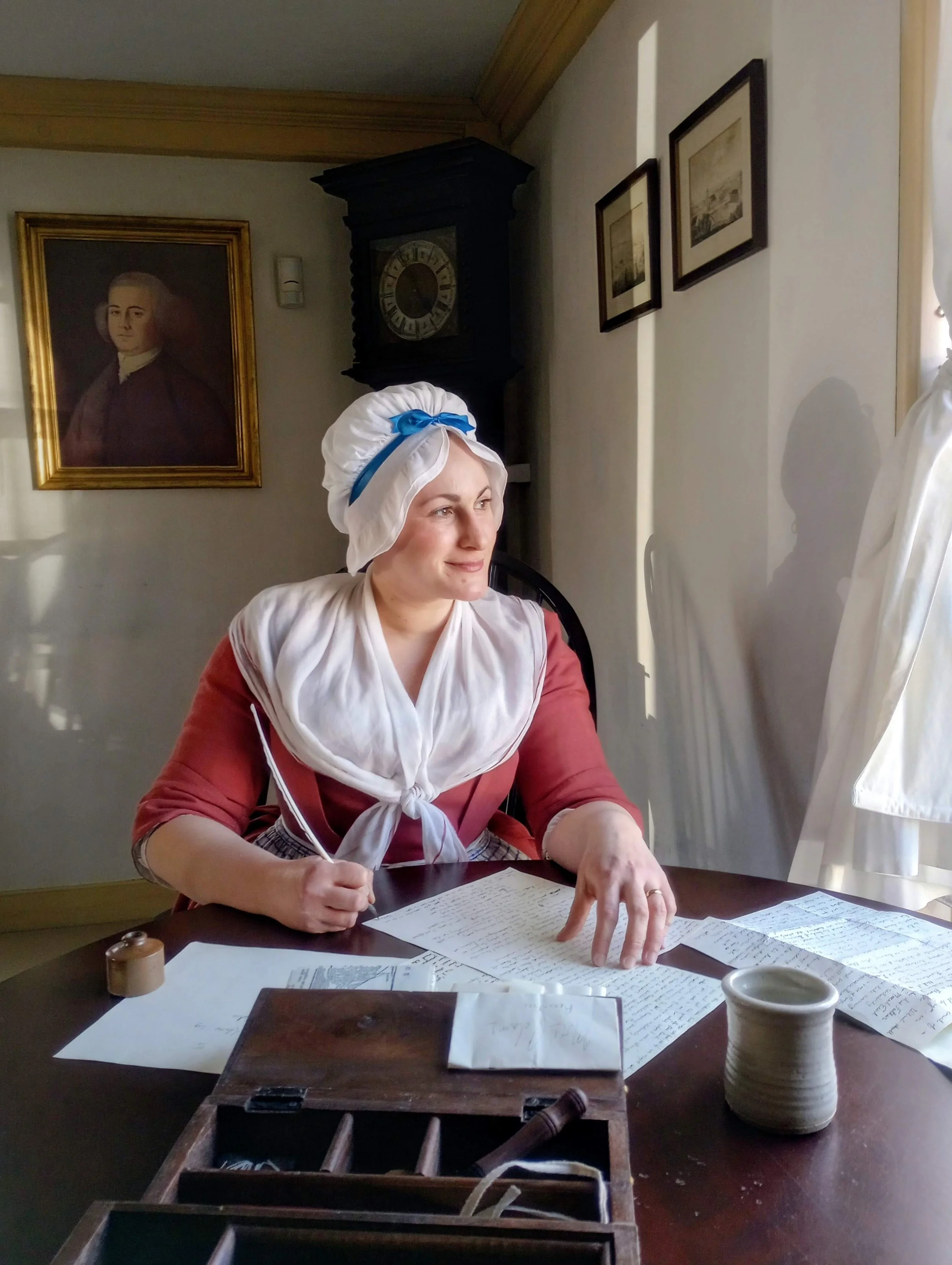
This scripted one-woman show takes place in the spring of 1776. On March 31st, Abigail Adams writes a letter to her husband John Adams, who is serving as one of the Massachusetts delegates to the Continental Congress in Philadelphia. She asks him to “Remember the Ladies,” receives his flippant response a few weeks later, and on April 27th Abigail describes her disappointment and frustration in a letter to her close friend and mentor, Mercy Otis Warren. Throughout the play, Mrs. Adams muses aloud on the topics of government, freedom, education, and women’s rights. These passages are taken from other letters she wrote between 1774 and 1782. There is a strong "4th wall" for this performance; Mrs. Adams does not see the audience, just the interior of her own house. The show is approximately 40 minutes long, with an optional 15-20-minute Q&A following. NOTE: For this program, I will need one pre-designated helper from the host site to read an introduction and epilogue, bookending the performance, and to deliver a letter partway through the show. More information will be provided to this person in advance of the performance.
"These Are The Times in Which a Genius Would Wish To Live"
A speaking engagement with Abigail Adams
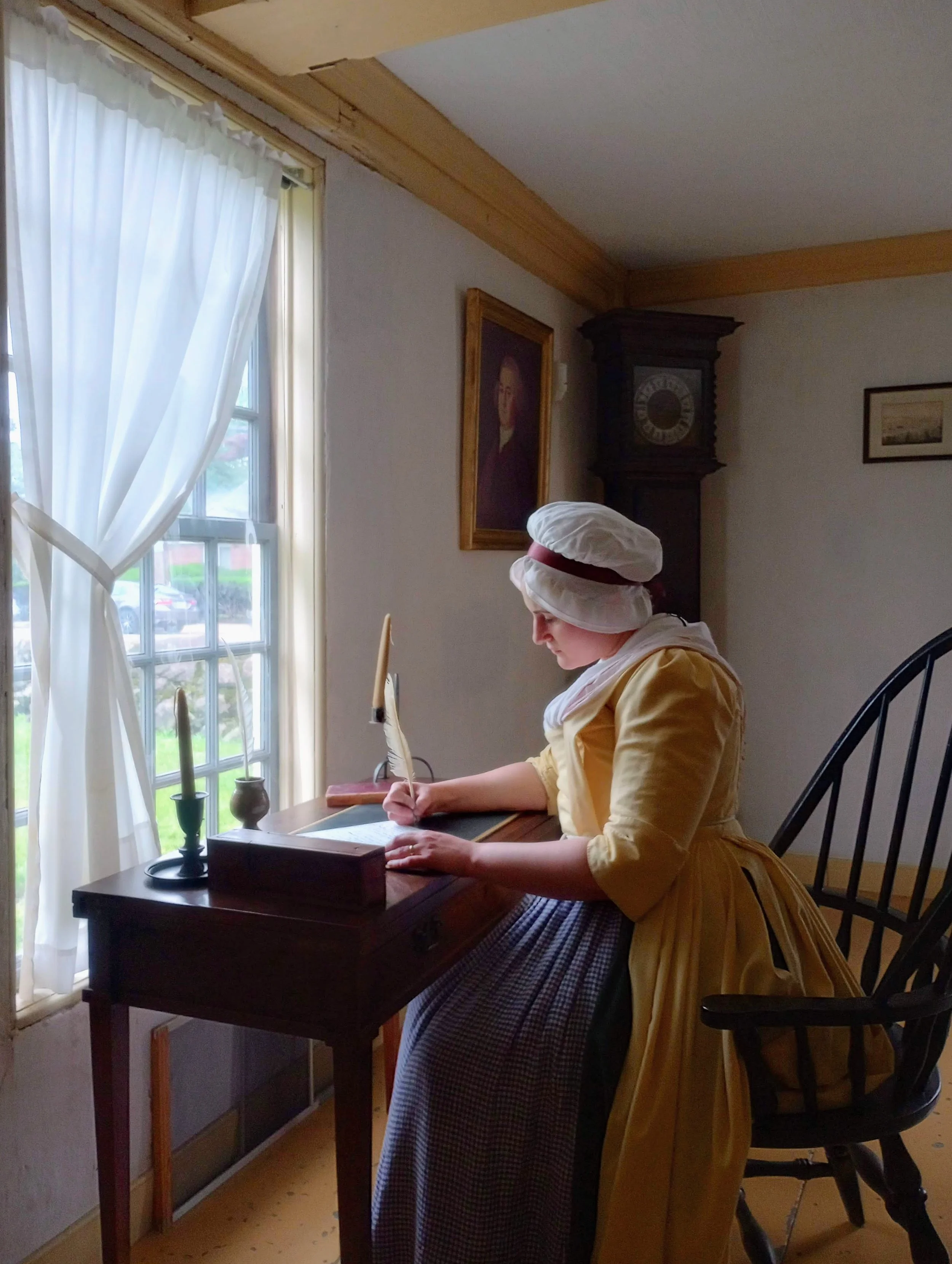
This is a 30-45-minute interactive speech I give as Mrs. Adams, followed by a 10-15-minute Q&A. I can tailor the content of the speech to highlight a particular period in her life (managing the farm during the war, traveling to Europe, life as the First Lady, etc) or specific themes (government, abolition, women's rights, education, etc). There is no "4th wall" for this performance; Mrs. Adams sees the audience, asks them questions, and is aware that they are from a different period in time than her own. Please let me know if you would like me to focus on or highlight any particular theme or period of time in the life of Abigail Adams. I like to tailor my presentation to each site where I perform. Here are some of the topics I can speak on (not limited to this list):
women's rights in Revolutionary America
equal education regardless of gender or race as a pillar of American success
the story of an ordinary MA family pulled into extraordinary public service
illness, nursing, and the everyday realities of life and death in the 18th century
operating a small business as a means of additional income during wartime
experience as 1st Second Lady and 2nd First Lady
thoughts on slavery, abolition, and equal rights
Tea in early America:
How a tiny dry leaf from the other side of the globe worked its way into the cultural identity of a young nation
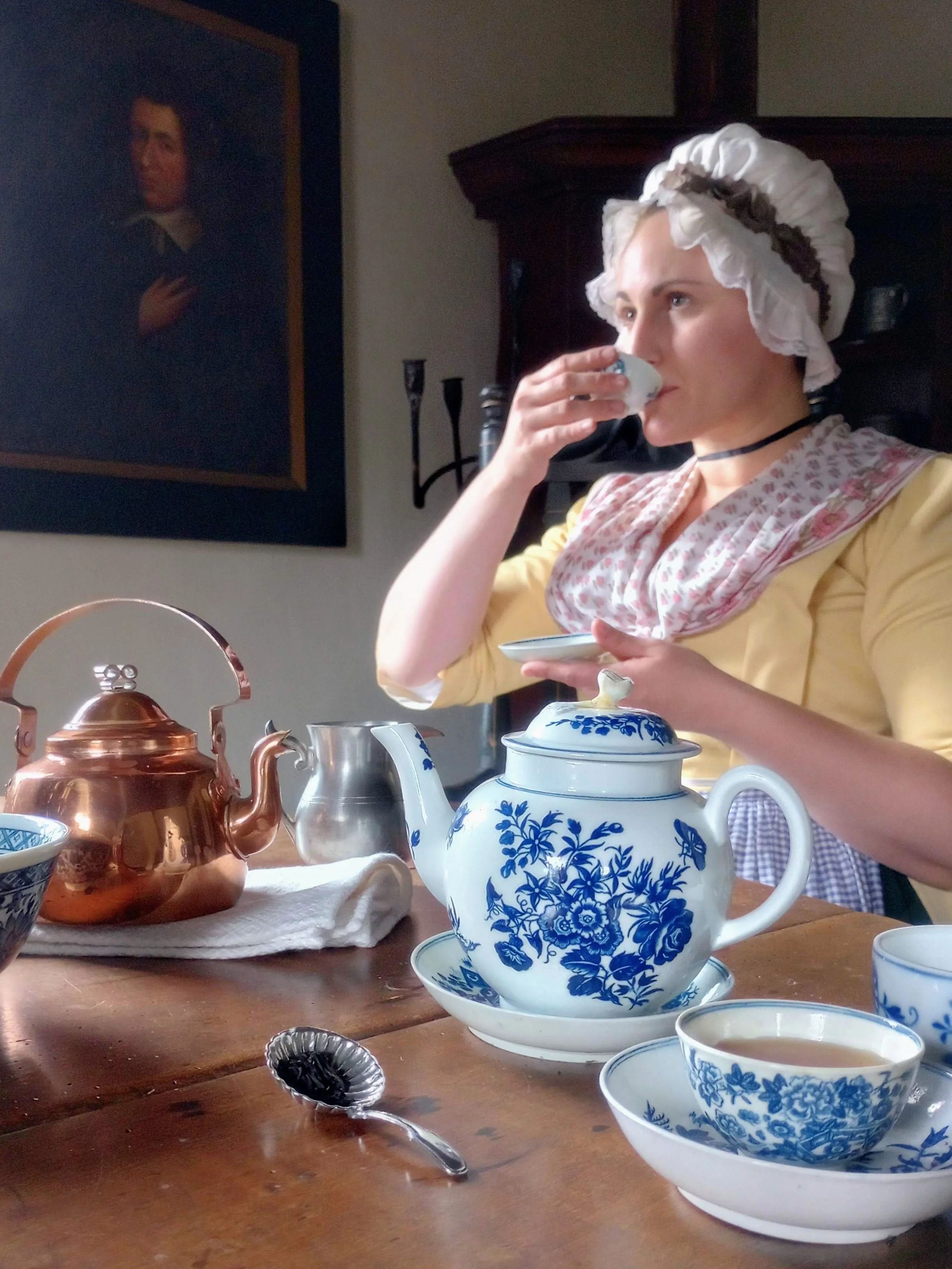
Join living history interpreter Audrey Stuck-Girard as she prepares a few cups of 18th-century tea with antique teaware and dishes on the ways the beverage impacted cultural traditions, global trade, and revolutionary politics in 18th century America. Audrey dresses for a tea party in 1773 and brings along her collection of porcelain tea wares and loose-leaf teas available during the American Revolution.
Perukes, Powder, Politics, and Patriots:
Men's Hair and Wigs in 18th-century England and America
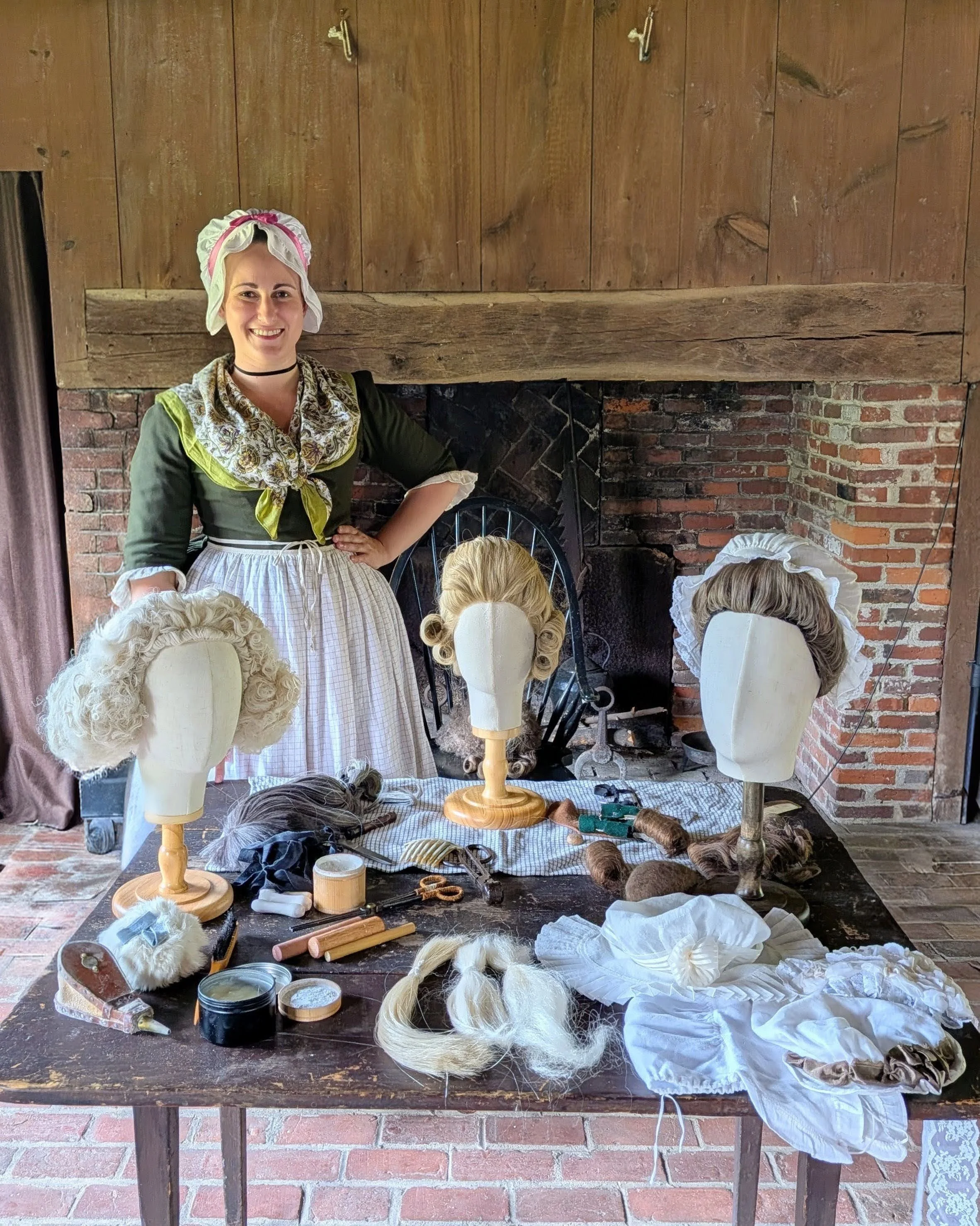
Why did men in the 1700s wear wigs? What were they made of, how were they styled, and who wore what? How would the hair care routine of George Washington compare to that of a low-ranking British soldier? How would it compare to Martha Washington's? Join living history interpreter and wig maker, Audrey Stuck-Girard, as she demonstrates trends and styling techniques used by wigmakers and hairdressers in the 18th century.
The Ladies of America:
“Inferior in love of virtue, of liberty, and of our country, we would not willingly be to any.”
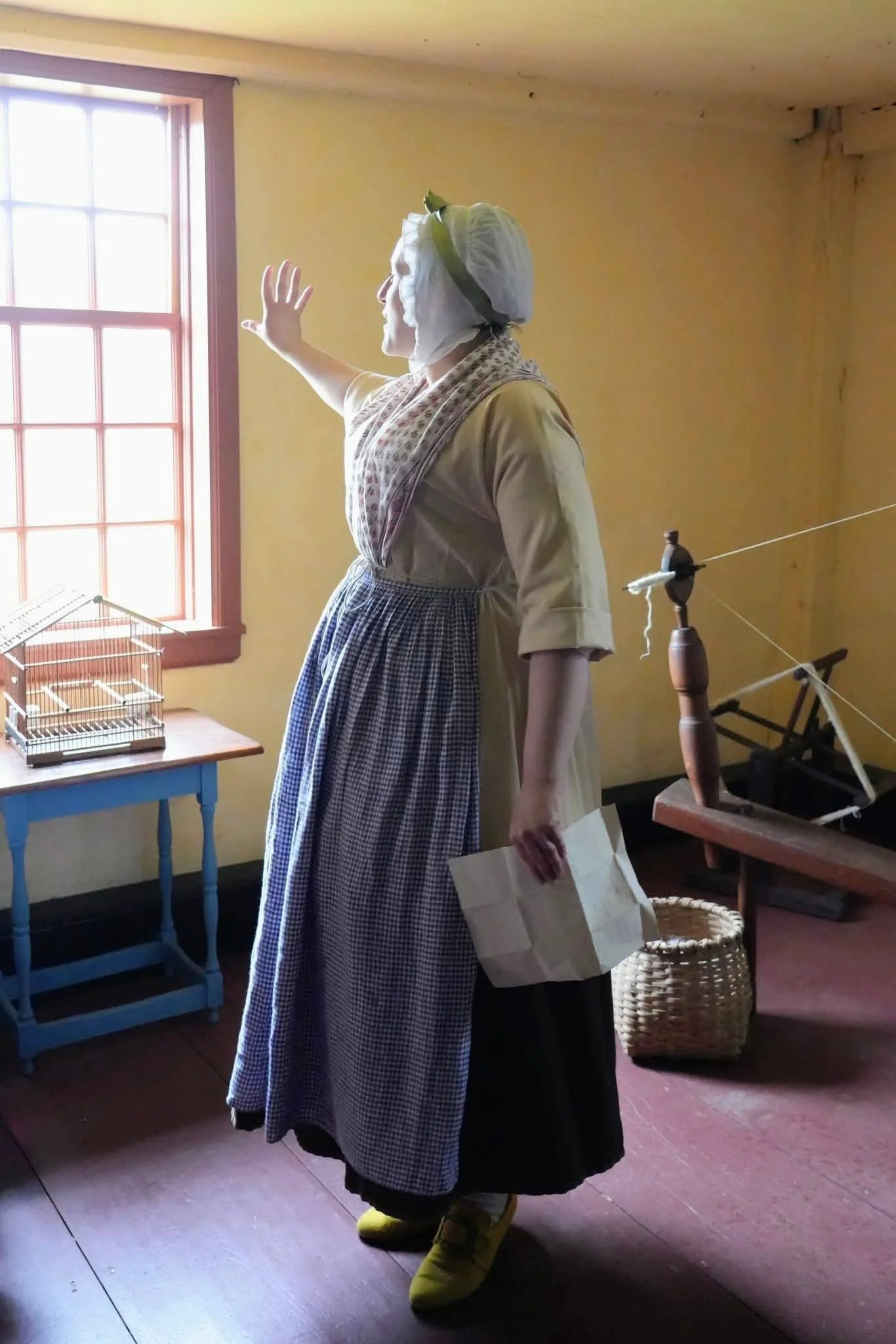
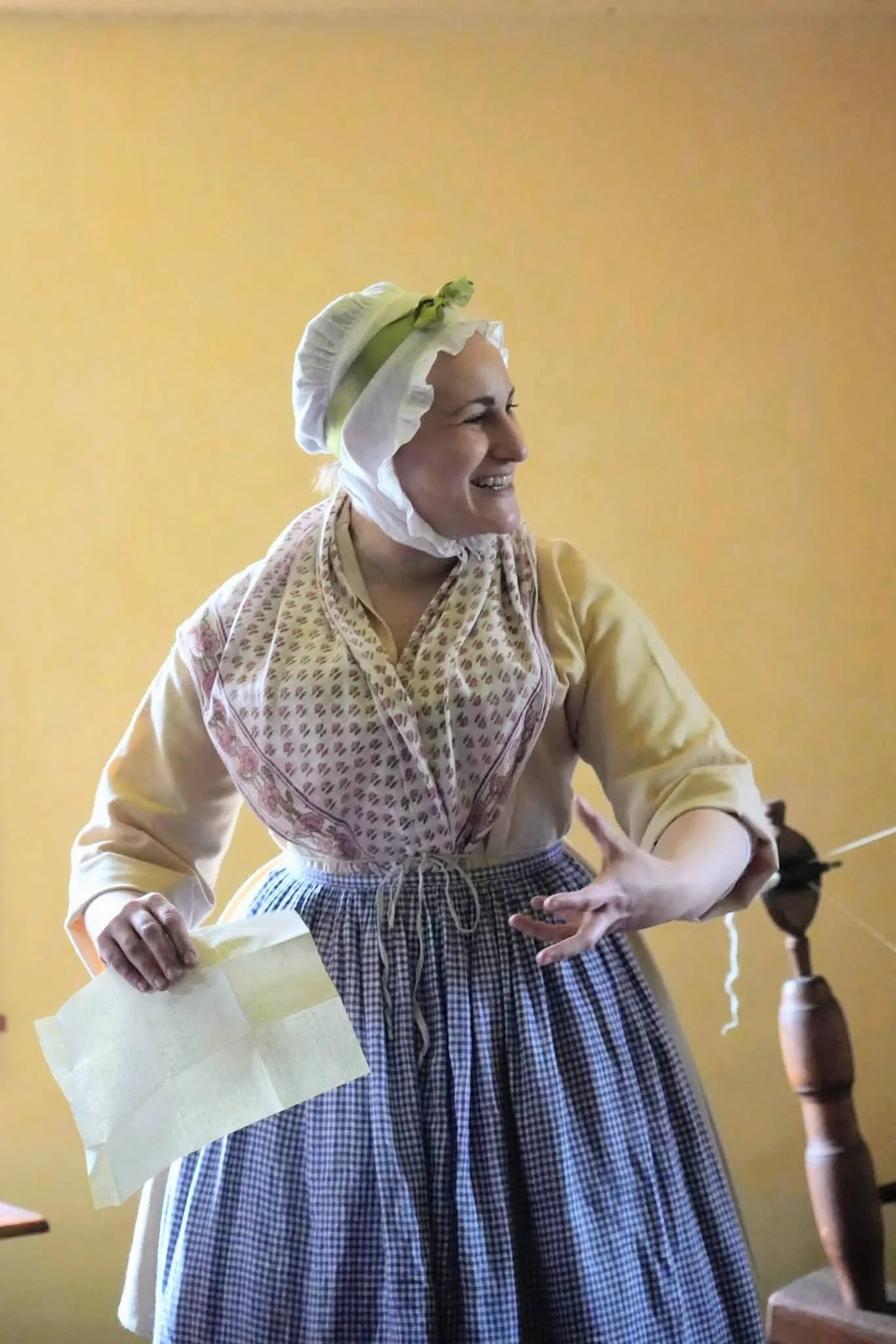
Join living history interpreter Audrey Stuck-Girard in an exploration of the “Female Politician” in early America. While the experiences of individual women during the War for Independence have been largely left out of the historical record, they were nonetheless active participants in the cultural shift known as the American Revolution. When the men in their lives were away serving or killed in the war, women endeavored (with varying levels of success) to fulfill both male and female roles in their absence. While their formal participation in the public sphere was limited, women read newspapers, listened intently to sermons, and had strong opinions about their communities. Ultimately, as the primary educators of young children, they shaped moral values and cultural ethics for the first generation of independent Americans.
An Entire Wardrobe 250 Years Out of Style:
Presenting identity through dress in living history and reenactment
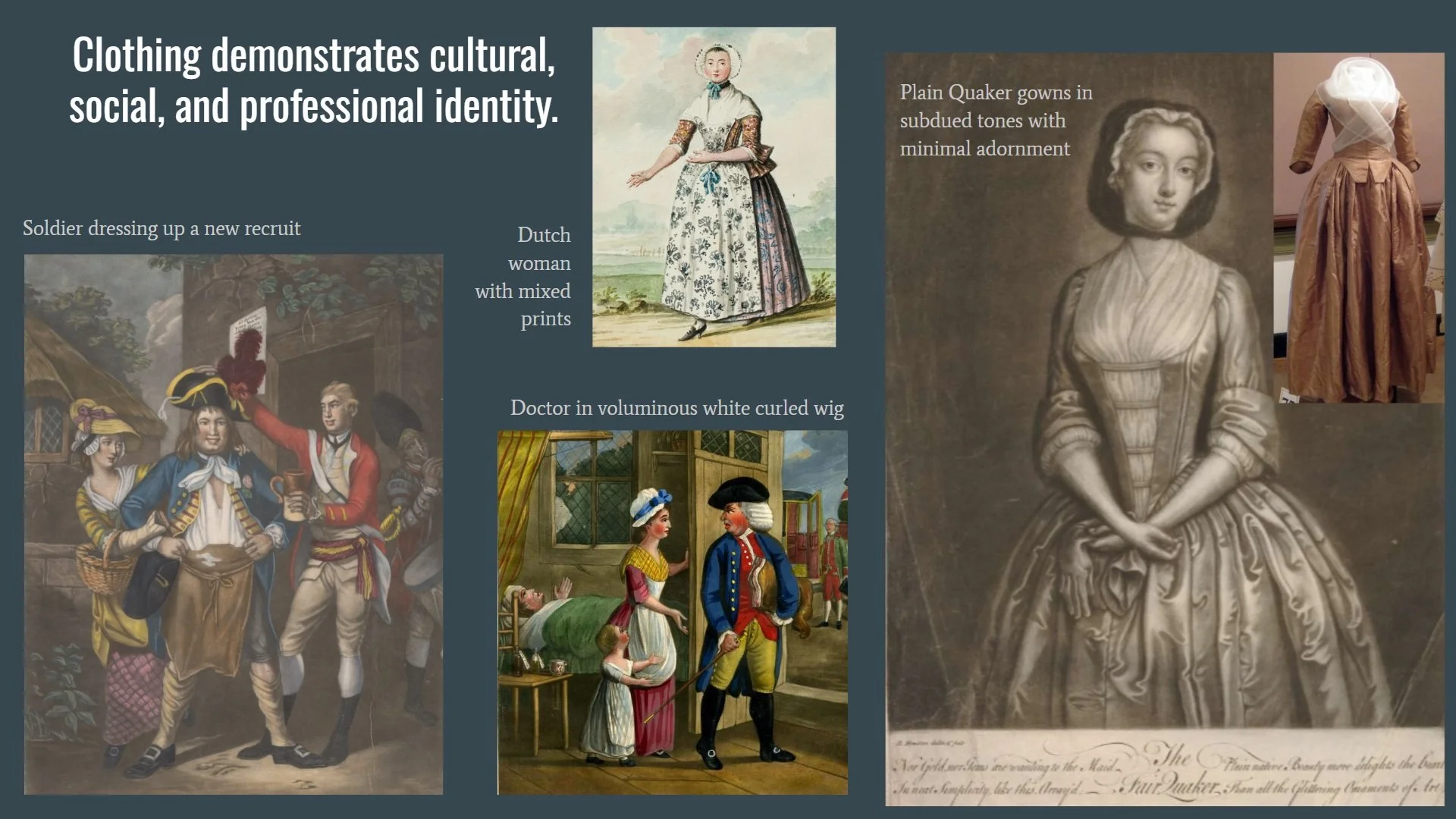
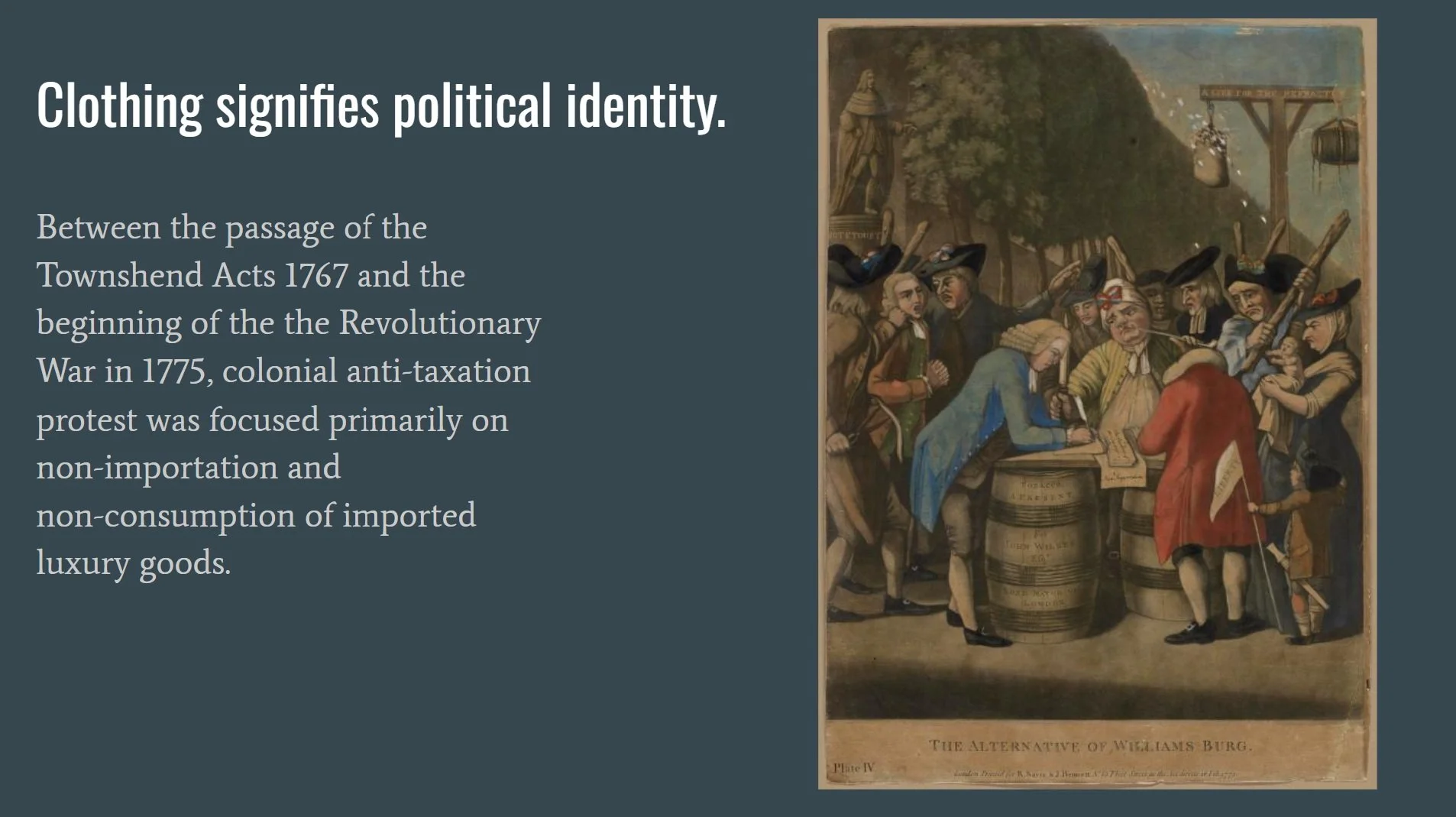
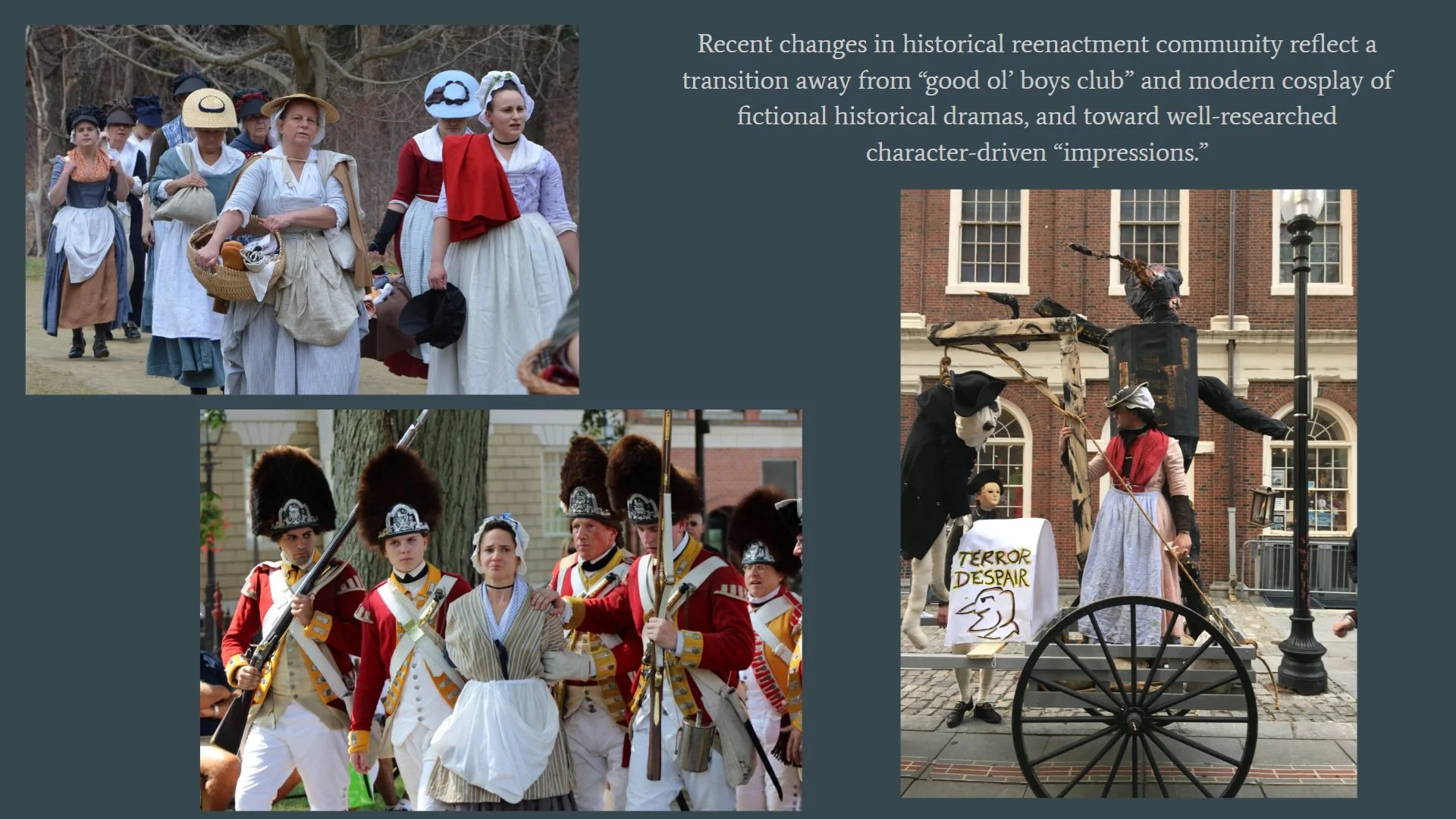
Living history interpreter Audrey Stuck-Girard explains what clothing meant to early Americans, both in material value and as a means of identifying oneself in society. We will examine images of surviving garments and artwork from the era, discussing the details of the clothing in the context of social status, gender, age, race, profession, religion, and politics. Next, we shift focus to the choices made by modern reenactors and living history interpreters when putting together our “costumes,” and the ways we use historical clothing as a tool for public engagement and education.
This is a program I’ve done a couple of times as a guest speaker for college courses on fashion history and the sociology of dress. I designed it to be presented virtually, since classes were still being held remotely at the time, but it can easily be done in person as long as there is a way to display the slideshow.
In general, I have portrayed women who lived in New England from around 1760-1810. While Abigail Adams was undeniably a Patriot, the other women whose stories I most like to highlight are those from the Loyalist end of the spectrum. Here are some favorites.
Other
Historical
Women
I Portray
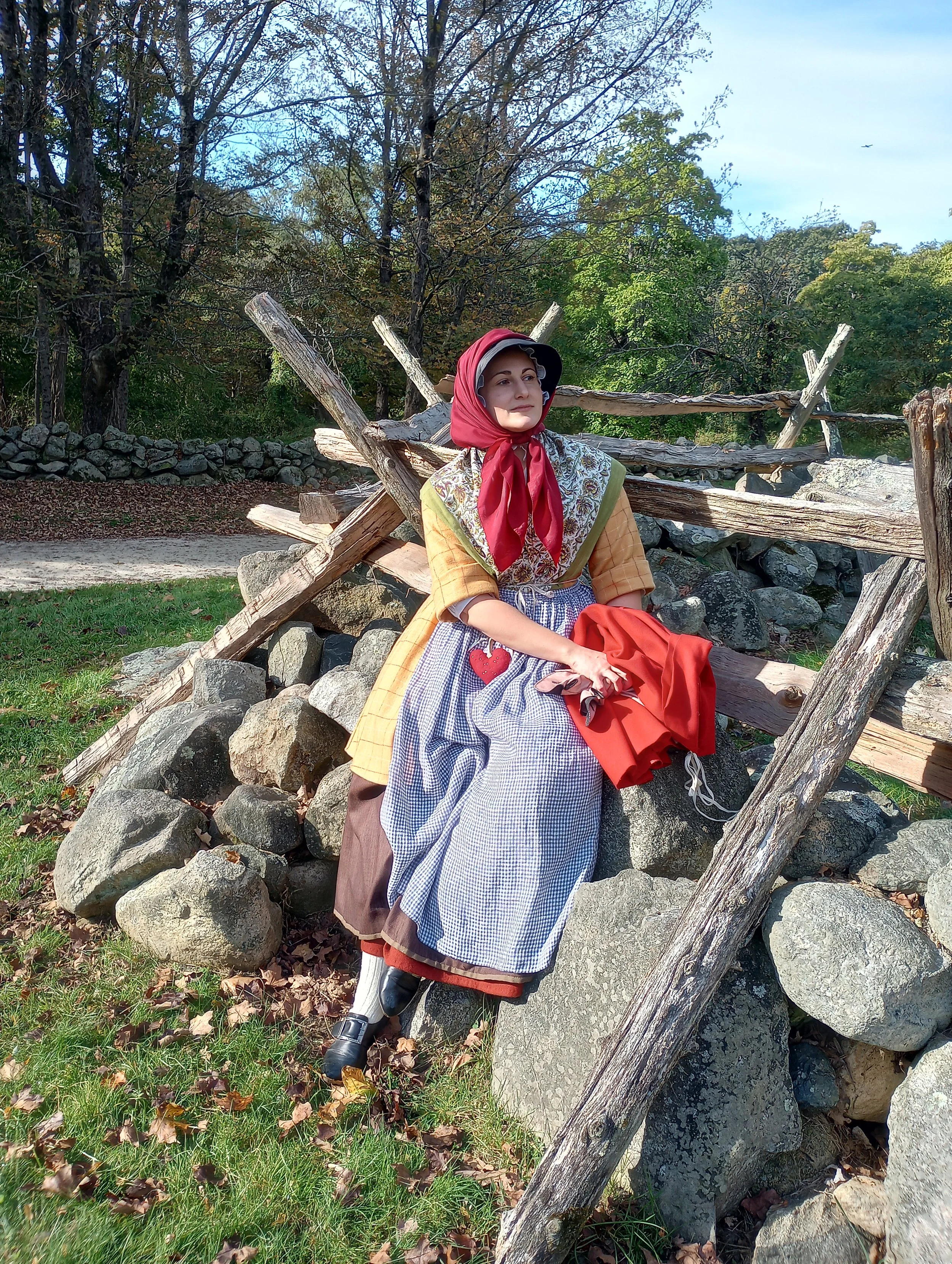
Sarah "Sally" Sumner Hewes
An impoverished Bostonian washwoman with an ever-increasing brood of children in the revolution's early years. Her husband, the shoemaker George Robert Twelves Hewes, was a sort of Forest Gump of revolutionary Boston. He witnessed the Boston Massacre, participated in the Boston Tea Party, made shoes for John Hancock, brought intelligence to George Washington when the army was encamped in Cambridge. For her part, Sally was a tea drinker when she could afford it, which was not often.
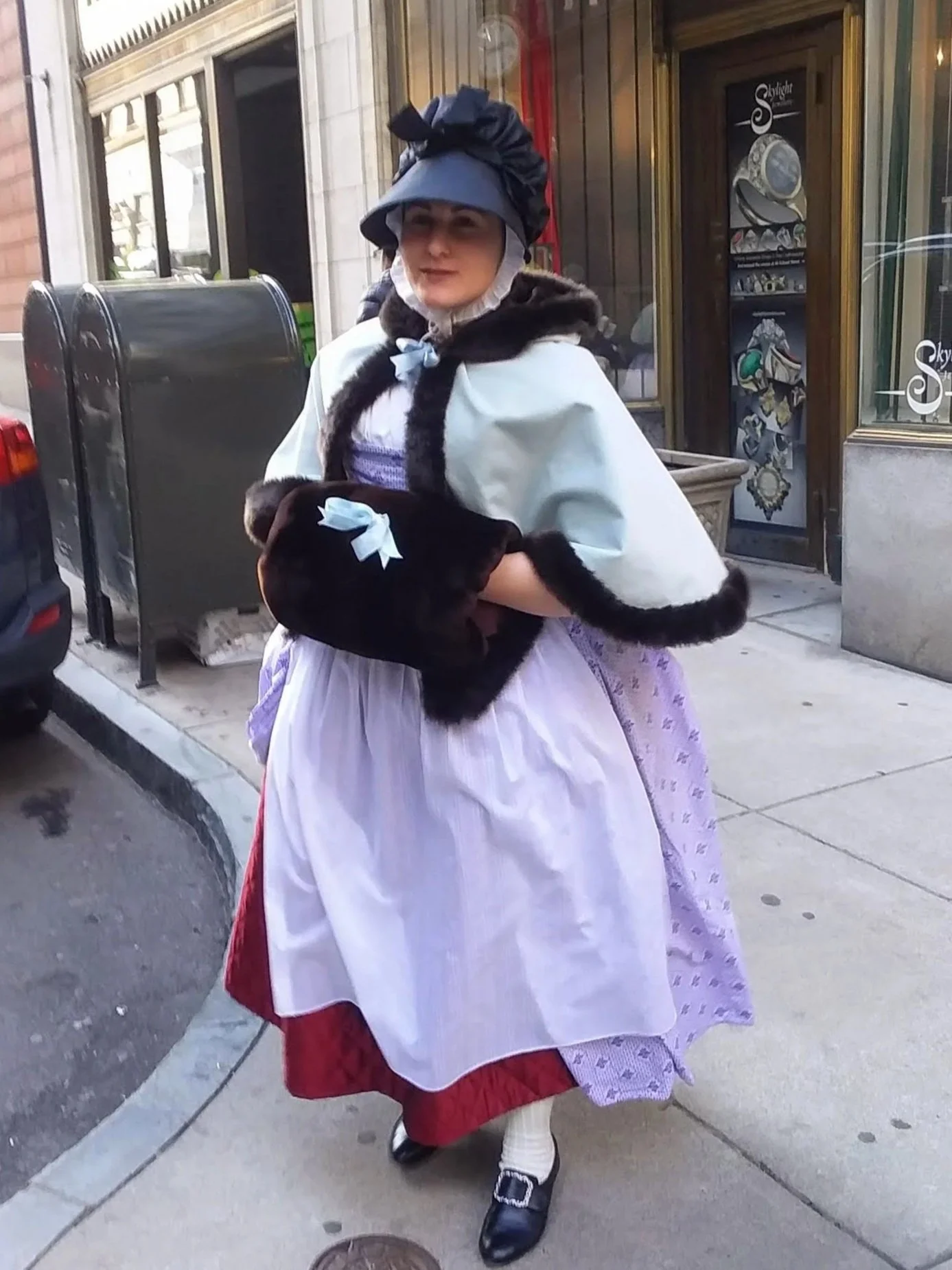
Elizabeth "Betsy" Cummings
A young, orphaned, unmarried, middle-class woman from Concord, MA who, along with her sister Ame, operated a respectable business importing trinkets and small luxuries such as gloves, fans, and ribbons from England. Without parents or husbands to offer an alternative means of support, the sisters resisted coercion to sign the non-importation agreements of the late 1760s. They were publicly condemned as "enemies to their country" and eventually escaped anti-loyalist violence by fleeing to Nova Scotia.
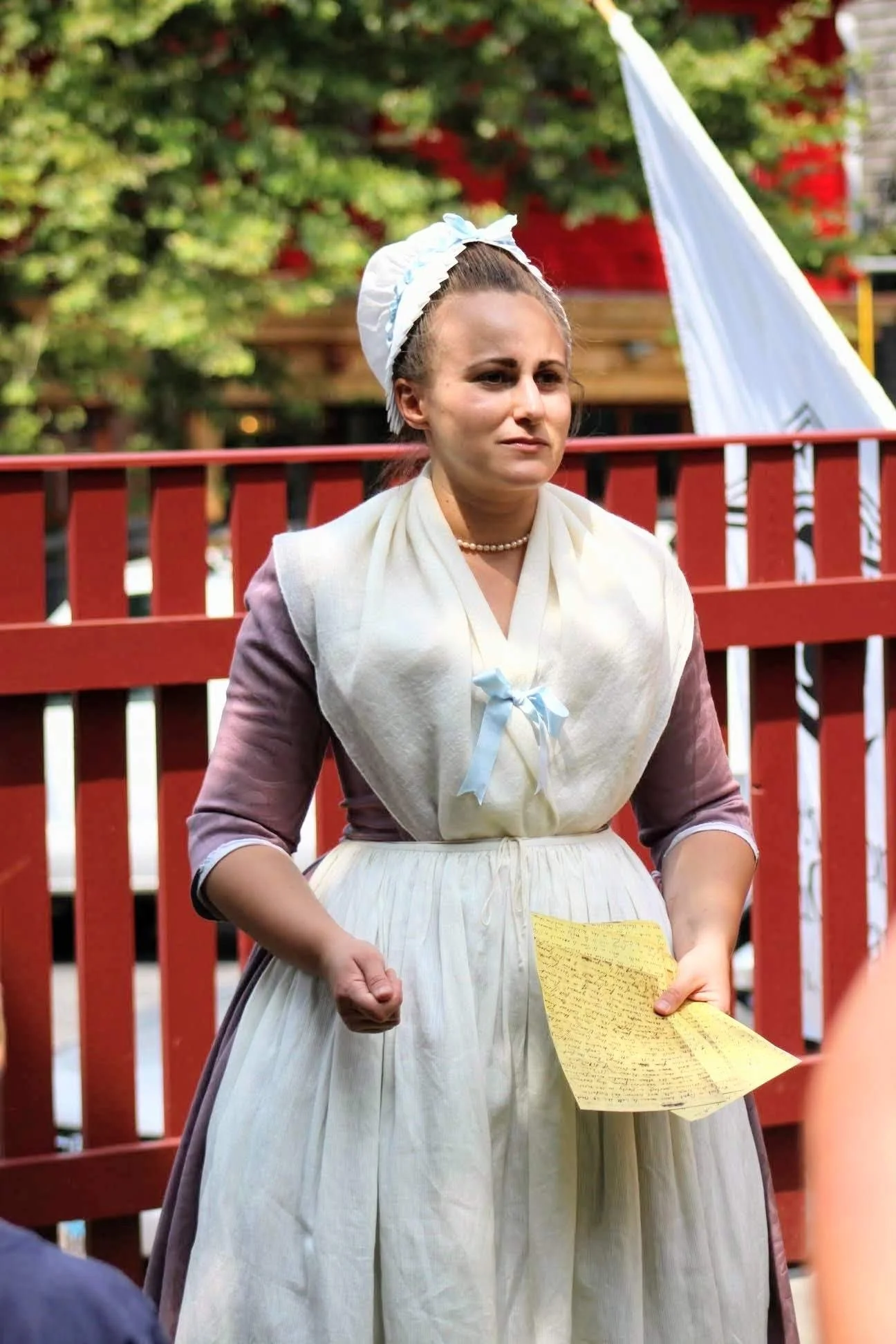
Mary Gould Almy
A Quaker-raised pacifist and boarding house keeper in Newport, RI. While her beloved husband Benjamin Almy enlisted in the American Army and was away from home during the Battle of Rhode Island in 1778, Mary viewed radical American rebels as the aggressors in the conflict and firmly maintained her loyalty to England. She wrote a series of unsent letters to her husband detailing the siege of Newport throughout August 1778.